Hands First
When the body senses cold, it narrows blood vessels in the extremities to protect the core. Fingers cool quickly, dexterity drops, and simple tasks — opening a flask, working a zip, pressing a headlamp switch — become slow and frustrating. That is why most experienced Nordic walkers carry a glove system rather than one pair.
A typical setup has a thin liner glove for fiddly tasks, an insulated glove or mitten for most of the day, and a windproof, waterproof over-mitt for the worst conditions. Mittens are warmer than gloves of similar weight because the fingers share warm air; gloves win on dexterity. Being able to swap quickly matters more than any single pair being perfect.
The European standard EN 511 covers protective gloves against cold and tests convective cold, contact cold and water penetration. It is mainly used for workwear, but if a glove carries the marking, it at least tells you it has been tested to a defined method. A glove without it is not necessarily worse — it simply means you rely on the maker's description.
 thick gloves
Glove-friendly design
Look for large toggles, zip pulls you can grip in mittens and wrist leashes so you can drop a mitt without losing it.
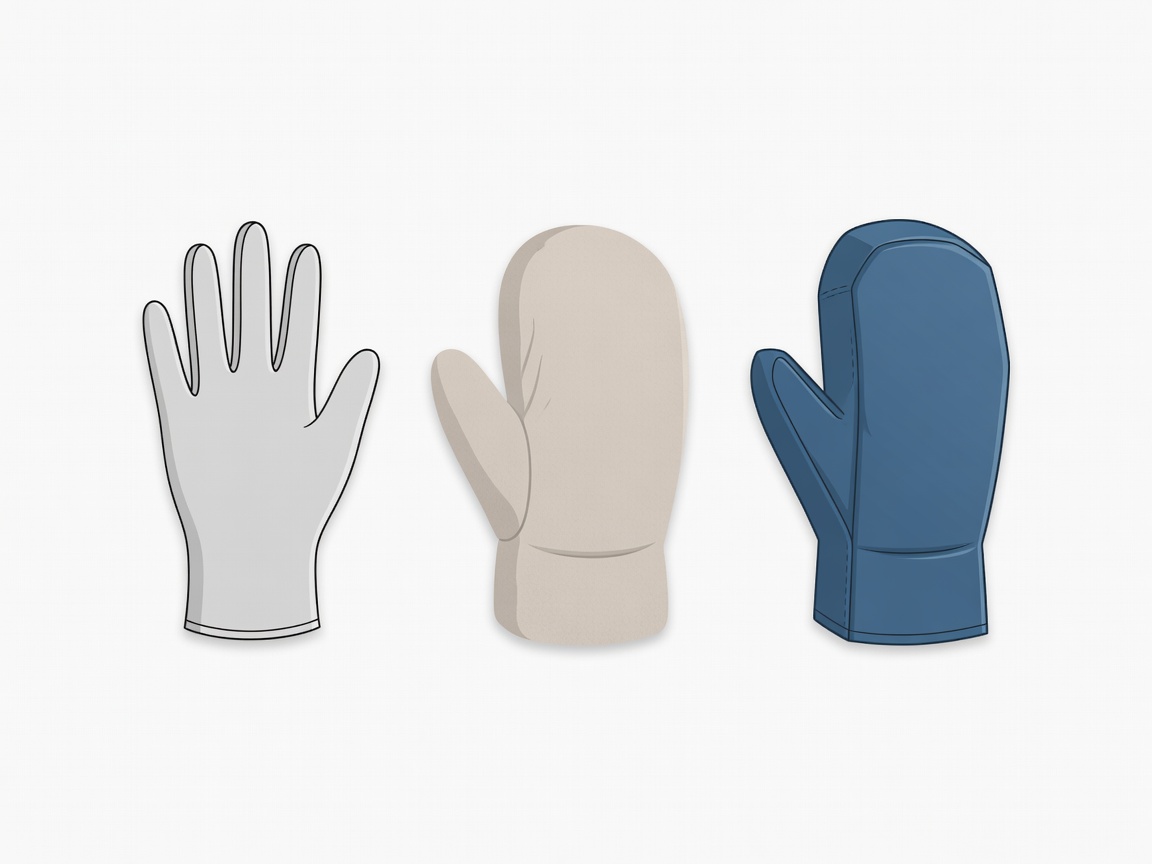 wet cold
Three thin, not one thick
Layered hand protection adjusts to effort and keeps a dry spare in reserve when one layer gets wet.
Layering That Breathes
The classic three-layer principle — base, mid, shell — is popular because it works. The base layer moves moisture away from skin; merino wool stays comfortable and resists odour, while synthetics dry faster. The mid layer, often fleece or a light insulated jacket, traps air. The shell blocks wind and precipitation.
The common mistake is overdressing at the start. Walk or ski uphill in full insulation and you will sweat; stop at the top and that moisture chills you rapidly. Many Nordic guides suggest starting slightly cool and adding a warm "stop jacket" at every break. ISO 11079, the standard for estimating required clothing insulation in cold environments, reflects the same idea: what you need depends heavily on activity level, not just temperature.
Down offers the best warmth for its weight and compresses small, but loses much of its insulation when wet. Synthetic fills are heavier for the same warmth yet keep more of their performance when damp — a meaningful advantage in the wet cold of coastal Norway or the Faroe Islands. Treated "hydrophobic" down narrows the gap but does not erase it.
| Insulation | Warmth for weight | When damp | Packed size | Best condition |
|---|---|---|---|---|
| Goose/duck down | Excellent | Loses much of its loft | Very small | Dry cold, inland |
| Treated down | Excellent | Somewhat better, still vulnerable | Very small | Dry cold with occasional moisture |
| Synthetic fill | Good | Retains more warmth | Medium | Wet cold, coast |
| Fleece | Moderate | Dries quickly | Bulky | Active mid layer |
| Boiled/felted wool | Moderate | Stays warm-ish, gets heavy | Bulky | Around camp and cabins |
Heated Gear: Useful, Not Magic
Battery-heated gloves, socks, insoles and vests have improved a lot. For stop-start activities — photographing the aurora near Abisko, ice fishing, standing at a sports event in Tampere — they can be genuinely transformative. For a full day of walking they are less compelling.
The trade-offs are practical. Runtime claims are typically measured on the lowest setting; on high, expect a fraction of the headline figure. The batteries themselves suffer in the cold, so the very conditions that make you want heat also shorten how long you get it. Heating elements add stiffness and seams, and wet heated gloves still feel wet. Most importantly, heated gear can mask the warning signs that you are underdressed. Treat it as a comfort boost on top of a sound clothing system, never as a replacement for one.
Field note: Keep spare batteries for heated gear in an inside pocket, and turn heat on before your hands get cold — rewarming numb fingers takes far more energy than keeping warm ones warm.
Feet, Breaks and the Flask
Feet lose heat into the ground, especially when standing still on snow. Boots sized with room for a thicker sock and wiggle space stay warmer than a snug pair, because compressed insulation and restricted circulation both cool toes. A removable felt or foam insole adds a layer between foot and ground and can be dried separately overnight.
A sit pad — a small square of closed-cell foam — is one of the cheapest warmth upgrades available. And then there is the vacuum flask. A hot sweet drink at a break replaces fluid and calories and lifts morale. Look for a lid you can open with gloves on, a cup that does not conduct heat to your lips, and a seal you can remove for cleaning. Steel flasks dent rather than break, which matters in a pack thrown into a snowmobile sledge.
None of this replaces sensible planning: the Norwegian Mountain Code (Fjellvettreglene) reminds walkers to turn back in time and carry what they need. Warm kit simply gives you more margin to make good decisions.